
Summit AI™
Turn full-sample tissue imaging into measurable disease biology
Summit AI™ analyzes full-sample imaging data and integrates multimodal data layers to generate quantitative tissue signatures that reflect how disease is organized across tissue.
Platform highlights
From full-sample imaging to quantitative tissue intelligence
Summit AI™ is designed to help teams move from large tissue images and volumetric datasets to measurable, confidence-aware outputs that support spatial profiling, digital pathology workflows, and quantitative tissue analysis.
Full-sample analysis
Measure tissue as a complete biological system, not as isolated regions or partial fields of view.
3D tissue signatures
Capture spatial organization across full tissue volume to support quantitative tissue analysis.
Uncertainty metrics
Interpret AI-powered analysis outputs with confidence-aware review and traceable image context.
Models that improve
Refine analysis through expert input and growing datasets to support repeatable workflows.
Why Summit AI™
From fragmented tissue analysis to full-sample quantitative insight
Current tissue analysis workflows often struggle with scale, iteration, disconnected tools, and inconsistent outputs. Summit AI™ brings these steps into a unified AI-powered analysis workflow for full-sample 3D tissue imaging and quantitative tissue analysis.
Analysis bottleneck
Tools do not scale
Large tissue images are difficult to analyze consistently across the full sample.
With Summit AI™
Scales to full-sample data
Analyze full-sample imaging data while preserving whole tissue context.
Analysis bottleneck
Iteration is slow
Reviewing outputs and changing parameters can slow analysis refinement.
With Summit AI™
Supports faster refinement
Expert input and repeatable workflows help teams refine outputs efficiently.
Analysis bottleneck
Workflows are fragmented
Review, segmentation, measurement, and interpretation happen across tools.
With Summit AI™
Unifies the pipeline
Connect image review, AI-powered analysis, spatial profiling, and measurement.
Analysis bottleneck
Outputs are hard to compare
Qualitative readouts can make cross-sample comparison difficult.
With Summit AI™
Focuses on insight
Generate measurable tissue signatures across samples and cohorts.
Multimodal context
Connect tissue images, data layers, and measurable disease biology
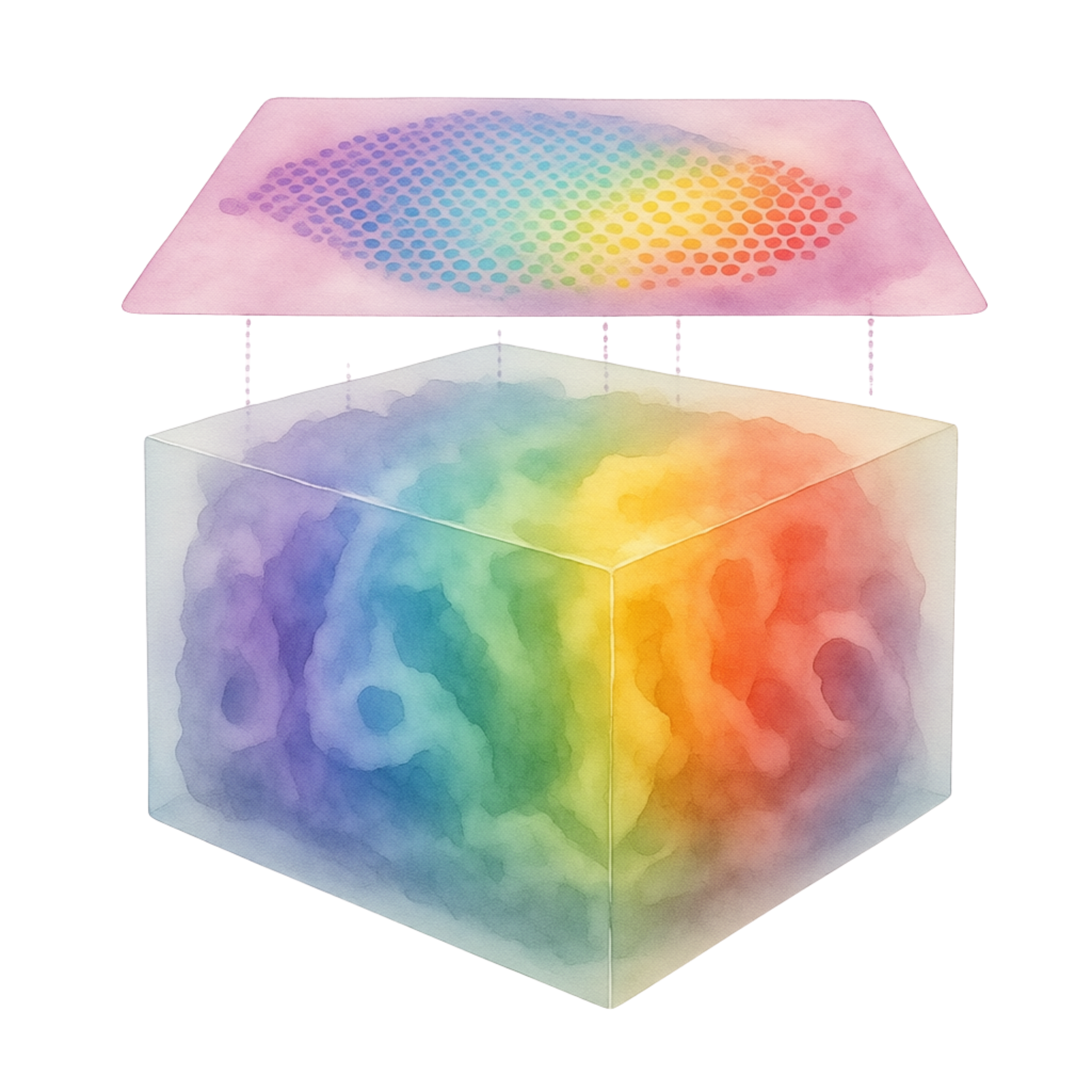
Summit AI™ is designed to work with full-sample 3D tissue imaging, complementary 2D tissue readouts, and sample-linked metadata, helping teams connect image context to quantitative tissue analysis.
- 3D tissue imaging: whole tissue imaging and volumetric datasets that preserve full-sample spatial context.
- Complementary 2D readouts: existing tissue data layers that can support interpretation.
- Sample-linked metadata: study, cohort, and sample context connected to downstream analysis.
The result is a connected workflow for spatial profiling, digital pathology, and quantitative tissue signatures.
How Summit AI™ works
A workflow from biological question to quantitative tissue signatures
Summit AI™ helps teams move from full-sample 3D tissue imaging and multimodal context to measurable outputs that support spatial profiling, digital pathology workflows, and quantitative tissue analysis.
Built around reviewable analysis. The workflow keeps image context connected to segmentation, measurement, and interpretation so teams can trace outputs back to the tissue.
Target definition
DefineSelect the cells, structures, tissue regions, and biological questions to measure.
AI-powered segmentation
SegmentApply analysis models across full-sample 3D tissue imaging and volumetric datasets.
Measurement extraction
ExtractConvert segmented features into structured quantitative tissue analysis outputs.
Insight generation
InterpretCompare tissue signatures and spatial profiling patterns across samples and cohorts.
AI guided analysis
Ask better tissue questions and review uncertainty in context
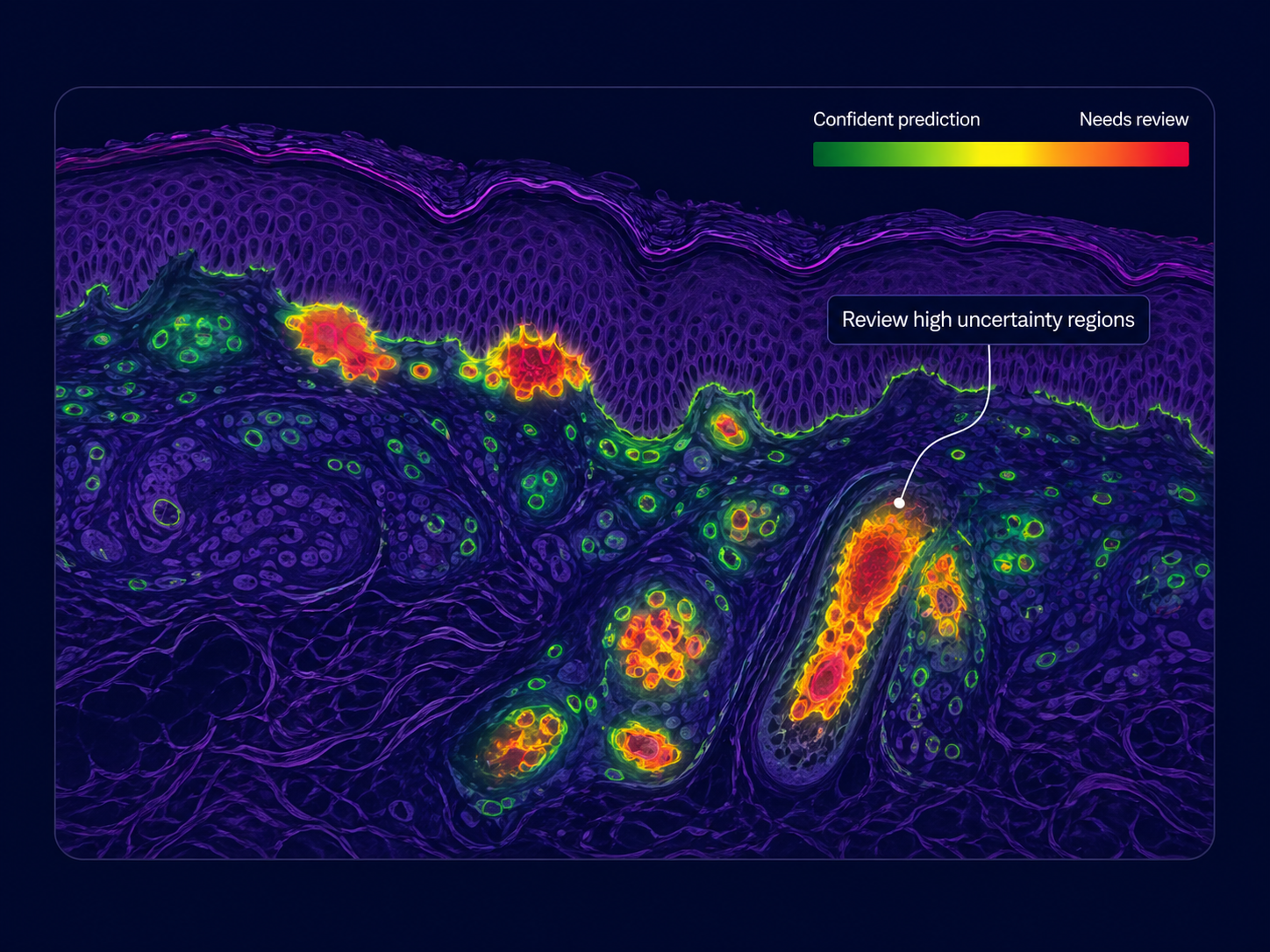
Summit AI™ combines AI powered analysis with uncertainty metrics so teams can explore tissue structure, review outputs, and keep measurements connected to image context.
Spatial Statistics Agent
Move from manual searching to guided spatial analysis
Query tissue features, spatial relationships, and cohort-level patterns without separating the question from the image data.
“Show immune cell density around nerve structures and compare patterns across samples.”
Output: segmented features, spatial measurements, and tissue linked regions for review.
Know where review matters
Confidence aware outputs flag regions that may require closer inspection.
Quantitative outputs
Turn image data into structured tissue readouts
Volume level
3D tissue signatures
Spatial organization captured across full tissue volume and linked to quantitative tissue analysis.
Disease level
Disease signatures
Measurable tissue patterns that help characterize how disease is organized across samples.
Feature level
Feature level measurements
Structured measurements across cells, structures, regions, and tissue features.
Cohort level
Cohort level comparisons
Compare tissue signatures and spatial patterns across samples and groups.
Review level
Confidence aware outputs
Uncertainty metrics help highlight outputs and regions that may need expert review.
Trace level
Image traceable results
Keep quantitative readouts connected to the source image and tissue context.
Initial deployment area
Built first for inflammatory skin disease research
Summit AI™ is first deployed in dermatology, where full biopsy context can help teams evaluate tissue architecture, immune organization, barrier disruption, and structural remodeling across inflammatory skin disease research.
Why full sample analysis matters: skin biology is spatially organized across tissue layers, epithelial structures, immune neighborhoods, nerves, follicles, and remodeling patterns.
Dermatology readouts
Full biopsy context
Analyze intact skin biopsy volumes with whole tissue context.
Quantitative tissue features
Measure architecture, immune patterns, and remodeling in 3D tissue imaging datasets.
Extensible framework
Apply the same AI powered analysis workflow to additional tissue driven indications.
Models grow with data
A learning layer that becomes more useful as evidence accumulates
Summit AI™ connects expert review, image-linked feedback, and reusable structured outputs so analysis can be refined as 3D tissue imaging datasets grow.
From review to refinement to reuse.
Review
Inspect outputs in the original tissue context.
Feedback
Capture confirmations, edits, and expert input.
Refine
Improve repeatable segmentation and measurement.
Reuse
Apply structured readouts across samples and studies.
See Summit AI™ in action
Turn tissue context into measurable disease biology
Explore how Summit AI™ connects full-sample 3D tissue imaging, AI-powered analysis, spatial profiling, and digital pathology workflows.
A connected workflow for tissue intelligence
- ✓ Analyze full-sample 3D tissue imaging data.
- ✓ Generate quantitative tissue signatures.
- ✓ Review outputs with image-linked context.