
Dermatology applications
3D dermatology imaging for full-volume skin analysis
The 3D Derm Score™ Assay helps quantify skin architecture, peripheral innervation, immune infiltration, and neuroimmune interactions across intact dermatology samples.
3D Derm Score™ Assay
A 3D digital pathology assay for the skin microenvironment
The 3D Derm Score™ Assay combines high-resolution 3D tissue imaging with quantitative tissue analysis to measure structure, cellular composition, and spatial profiling across intact dermatology samples.
Nerve fiber density
Biodistribution
Treatment effects
Cell clusters
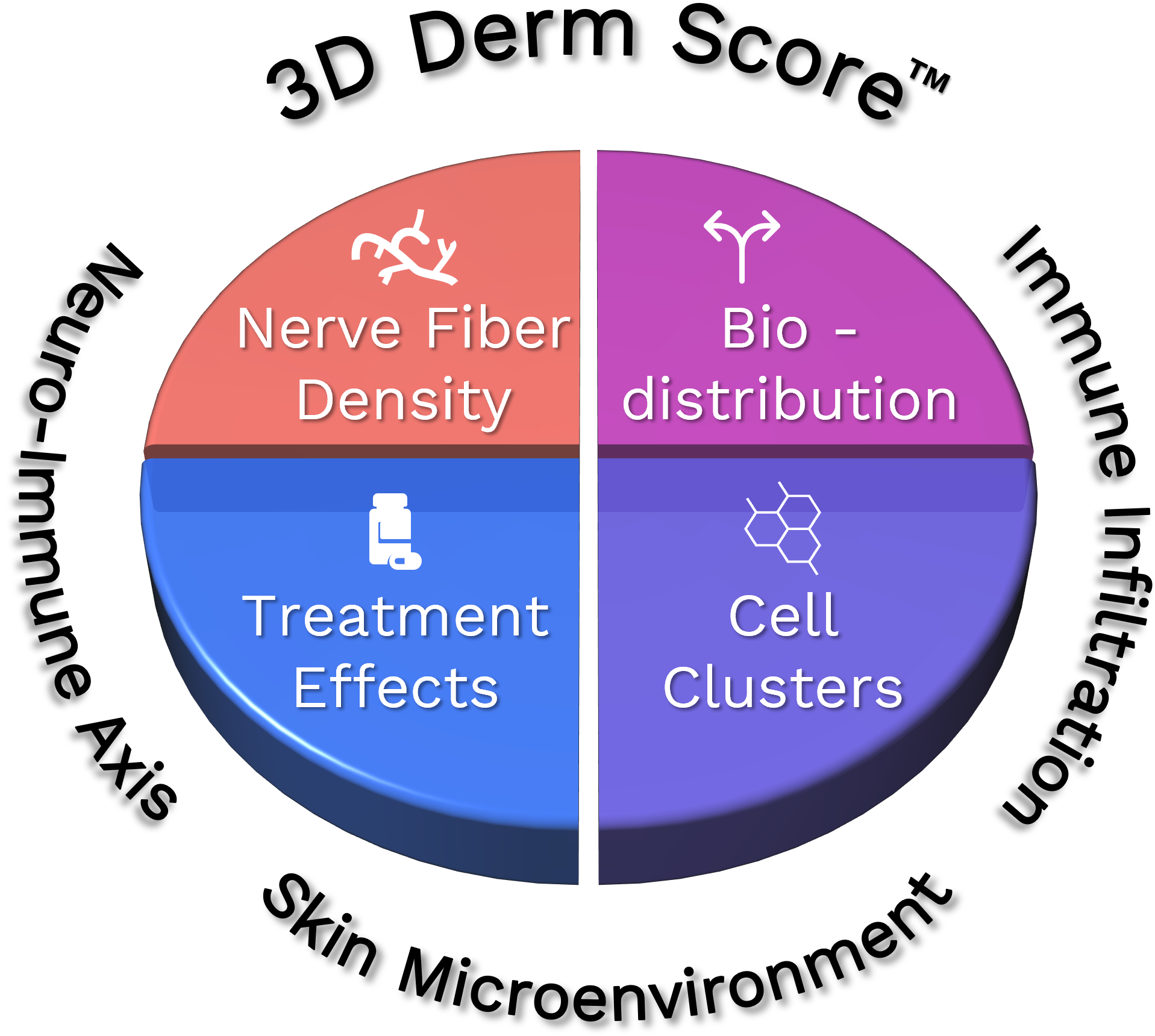
3D Derm Score™ readouts connect intact tissue imaging with measurable dermatology endpoints.
Why 3D dermatology imaging matters
Skin biology is spatial. Thin sections can miss the pattern
Dermatology samples contain layered structures, long nerve fibers, immune cell clusters, follicles, and local tissue remodeling. 3D tissue imaging captures these relationships across the biopsy volume.
Limited views of a complex tissue
Single 2D sections can provide useful histology, but they may sample a small part of a biopsy and separate features that are connected in 3D.
Full-volume insight for quantitative dermatology
Whole tissue imaging preserves spatial context, enabling quantitative tissue analysis of structures and cell relationships across intact dermatology samples.
From qualitative impressions to reproducible metrics. The 3D Derm Score™ Assay combines whole tissue imaging with quantitative analysis to support dermatology drug development, biomarker discovery, and translational research.
Spatial profiling in 3DSummit AI™ for dermatology
From full-sample skin imaging to structured disease readouts
Summit AI™ extends the 3D Derm Score™ workflow by connecting full-sample 3D tissue imaging with AI-powered analysis, spatial profiling, and quantitative tissue signatures across dermatology datasets.
3D Derm Score™ workflow
Dermatology assays built on the Aurora 3D™ workflow
Start with intact skin tissue, capture high-resolution 3D tissue imaging, process large volumetric datasets, and apply AI-powered analysis for quantitative dermatology readouts.
Input
Intact skin tissue
Skin and scalp samples prepared for whole tissue 3D imaging.
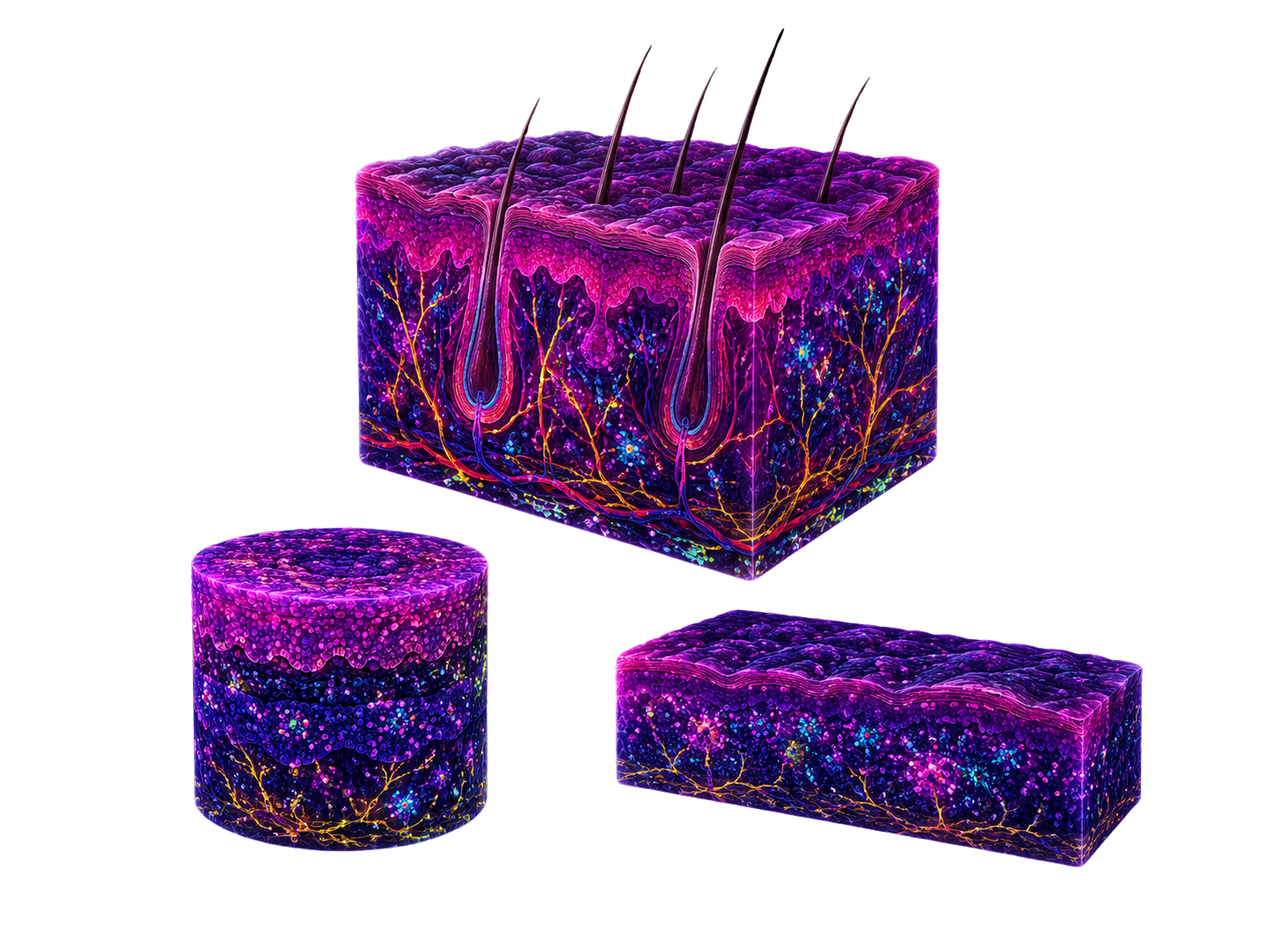
3D imaging
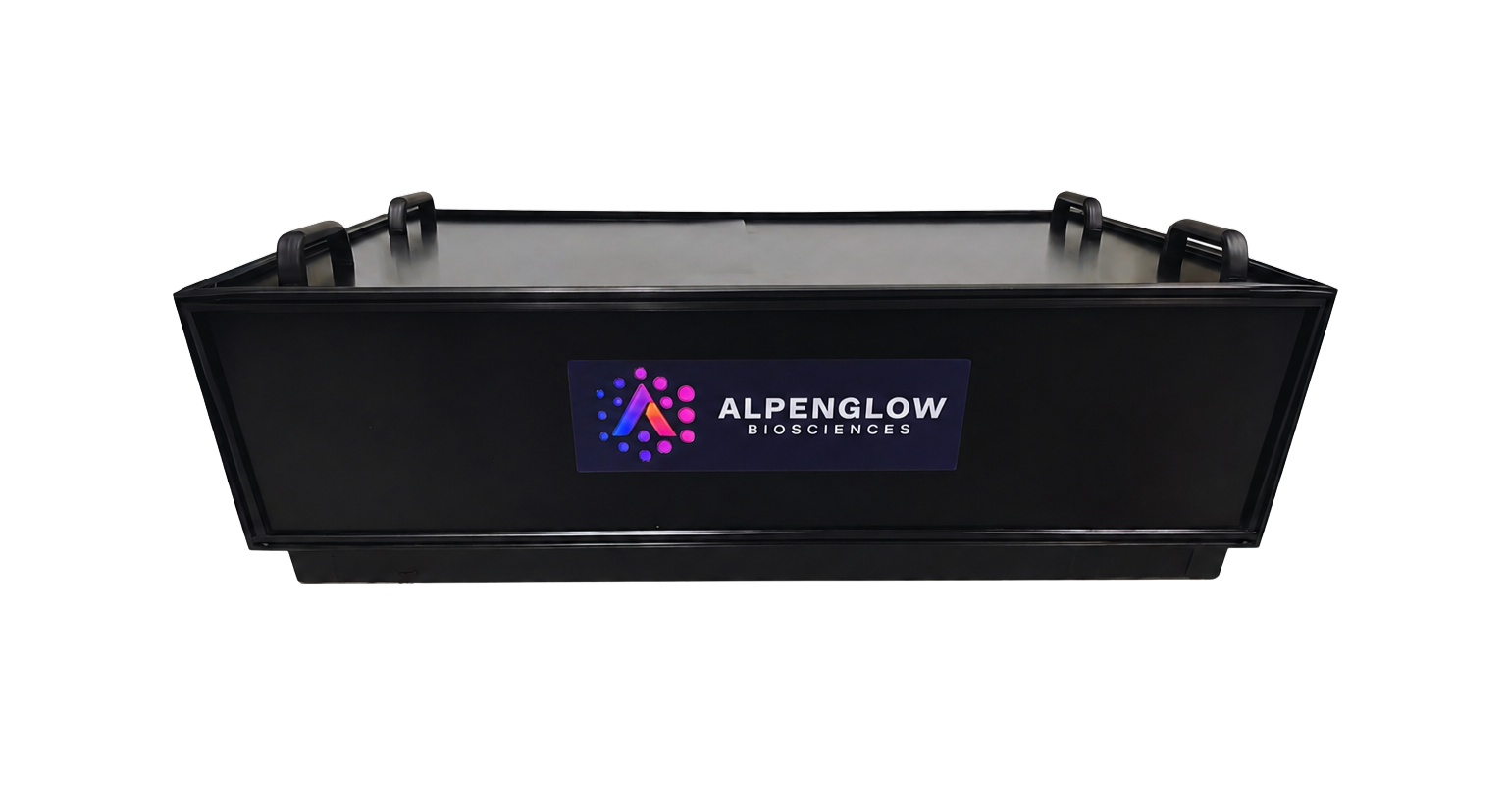
3Di HOTLS
High-resolution 3D tissue imaging across intact dermatology samples.
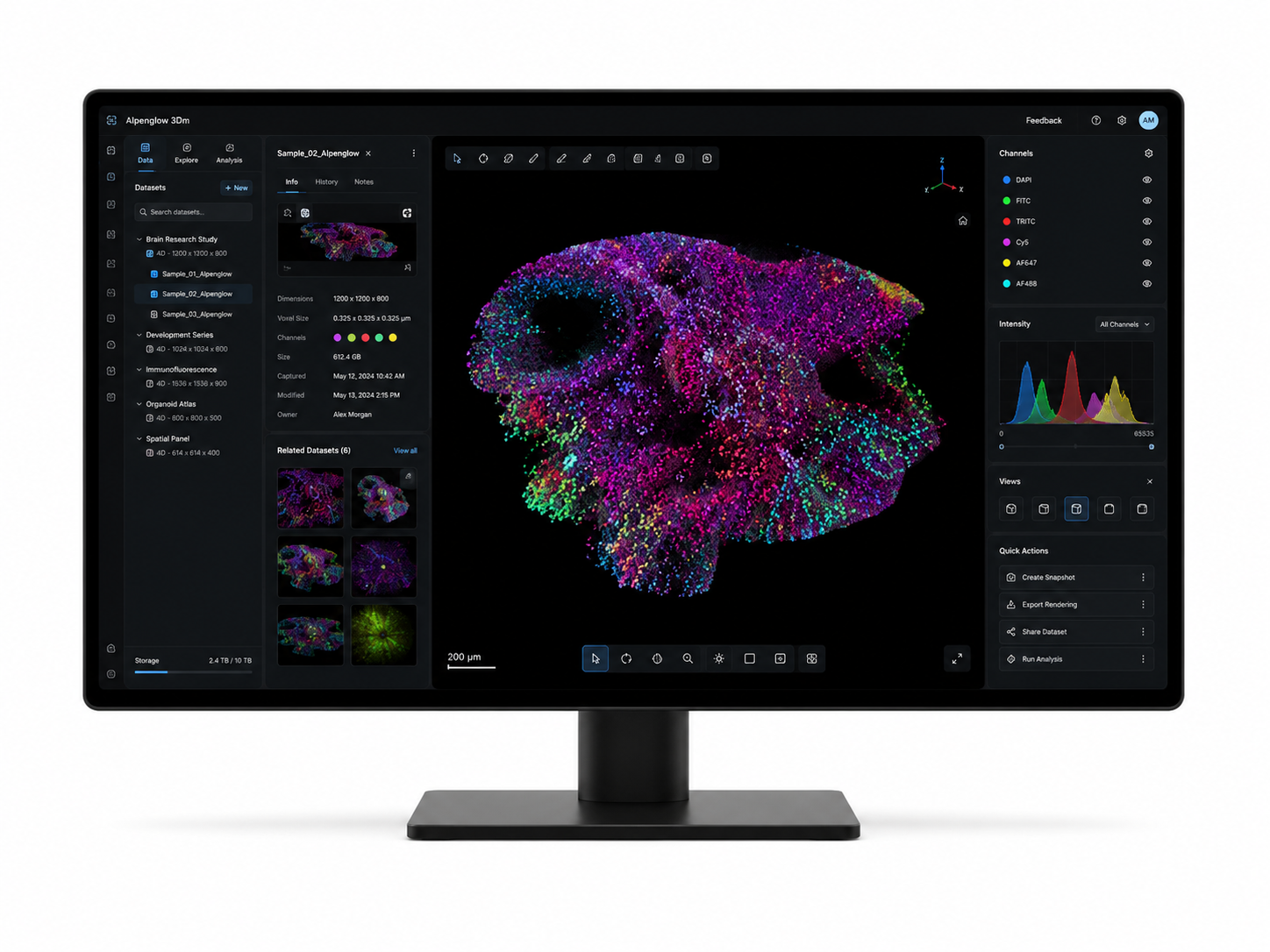
Data management
3Dm
Processing, correction, organization, and preparation of large 3D datasets.
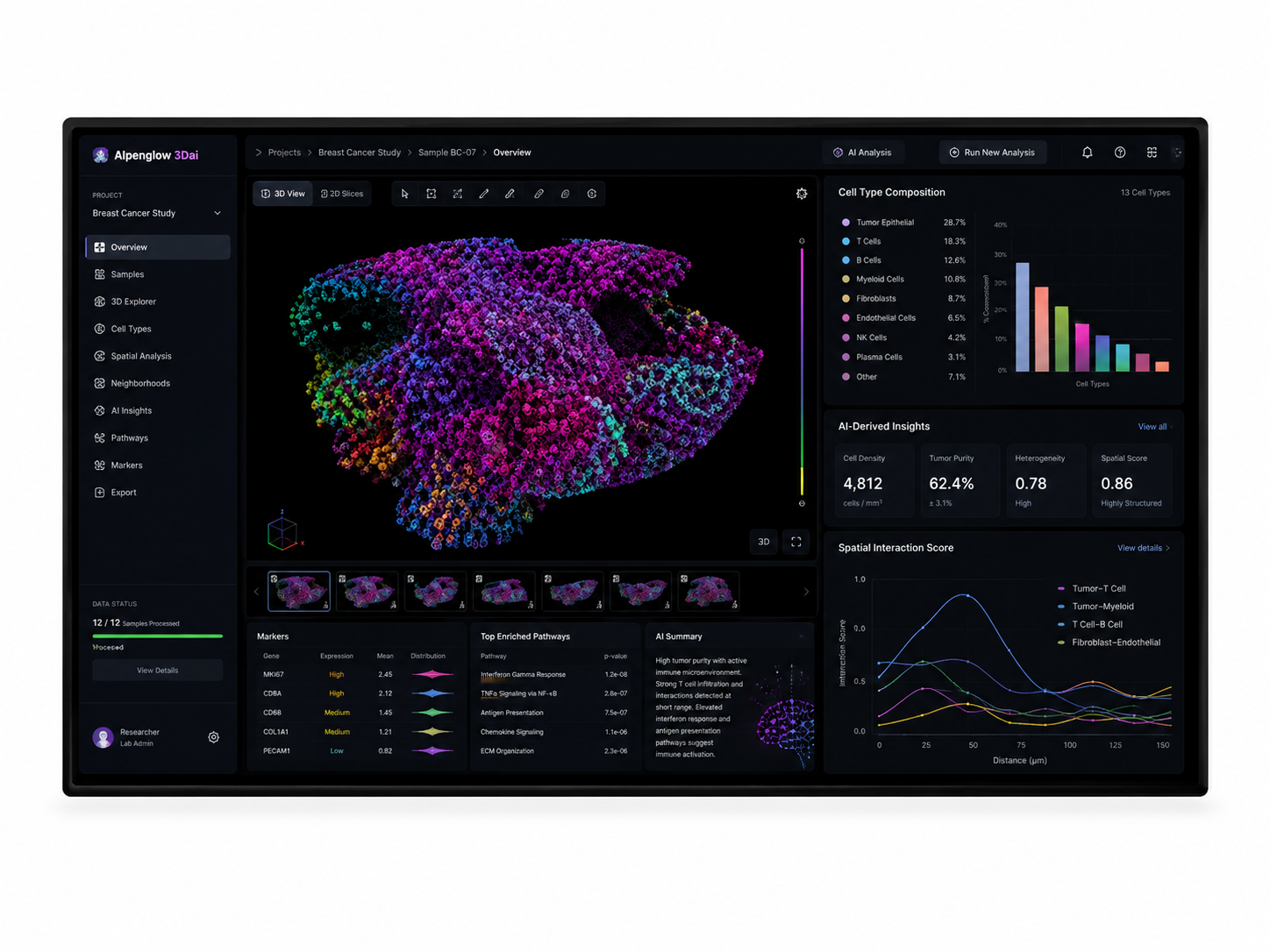
AI analysis
3Dai
AI-powered analysis for cells, structures, spatial relationships, and quantitative tissue analysis.
Output
Skin insights
Quantitative readouts for skin architecture, nerves, immune cells, follicles, and remodeling.

Marker panels
Flexible panels for skin and neuroimmune profiling
Different dermatology studies require different readouts. The 3D Derm Score™ Assay supports standard panels and customized marker strategies for 3D tissue imaging, spatial profiling, and quantitative tissue analysis.
Select a pre-optimized panel
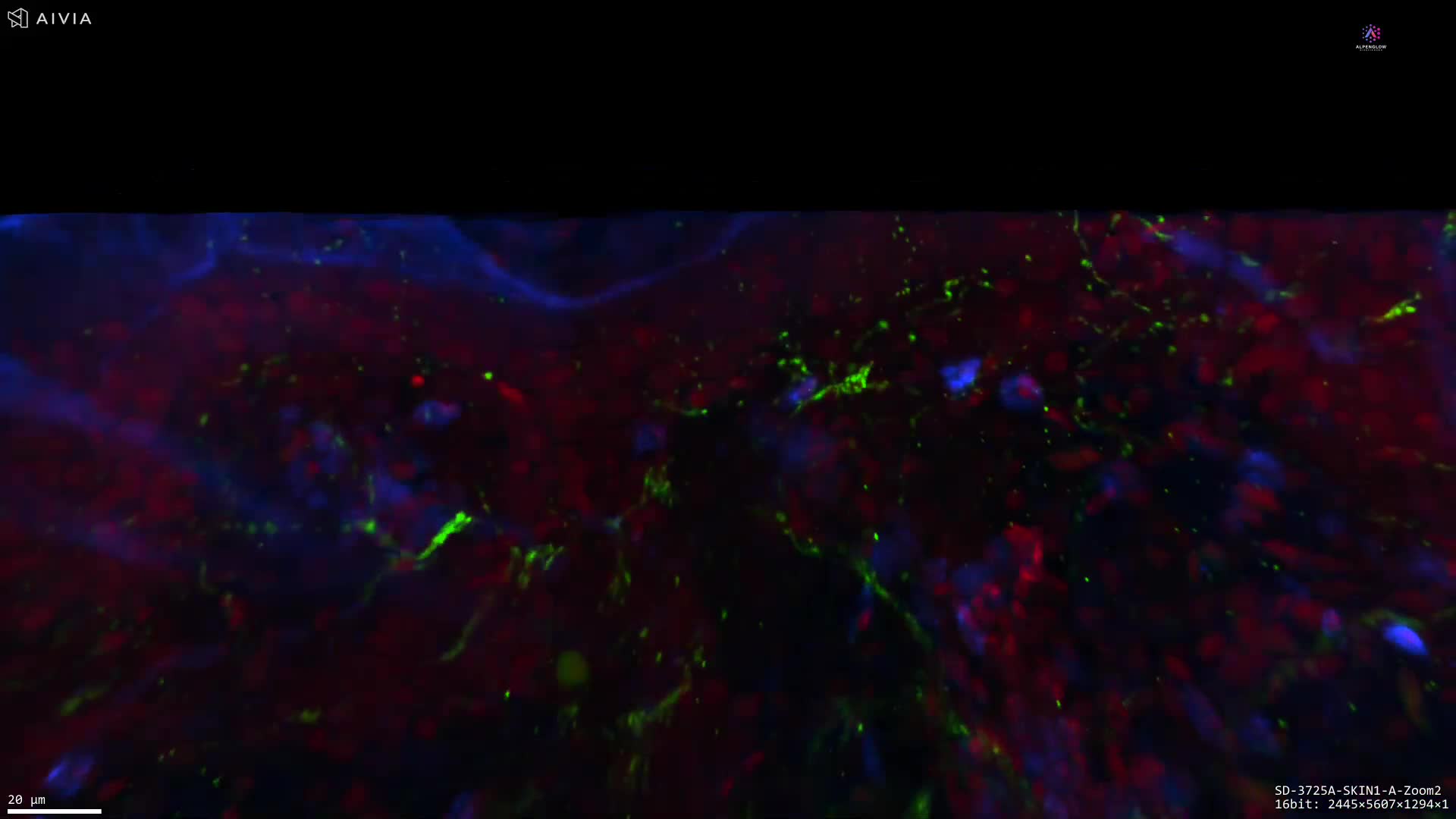
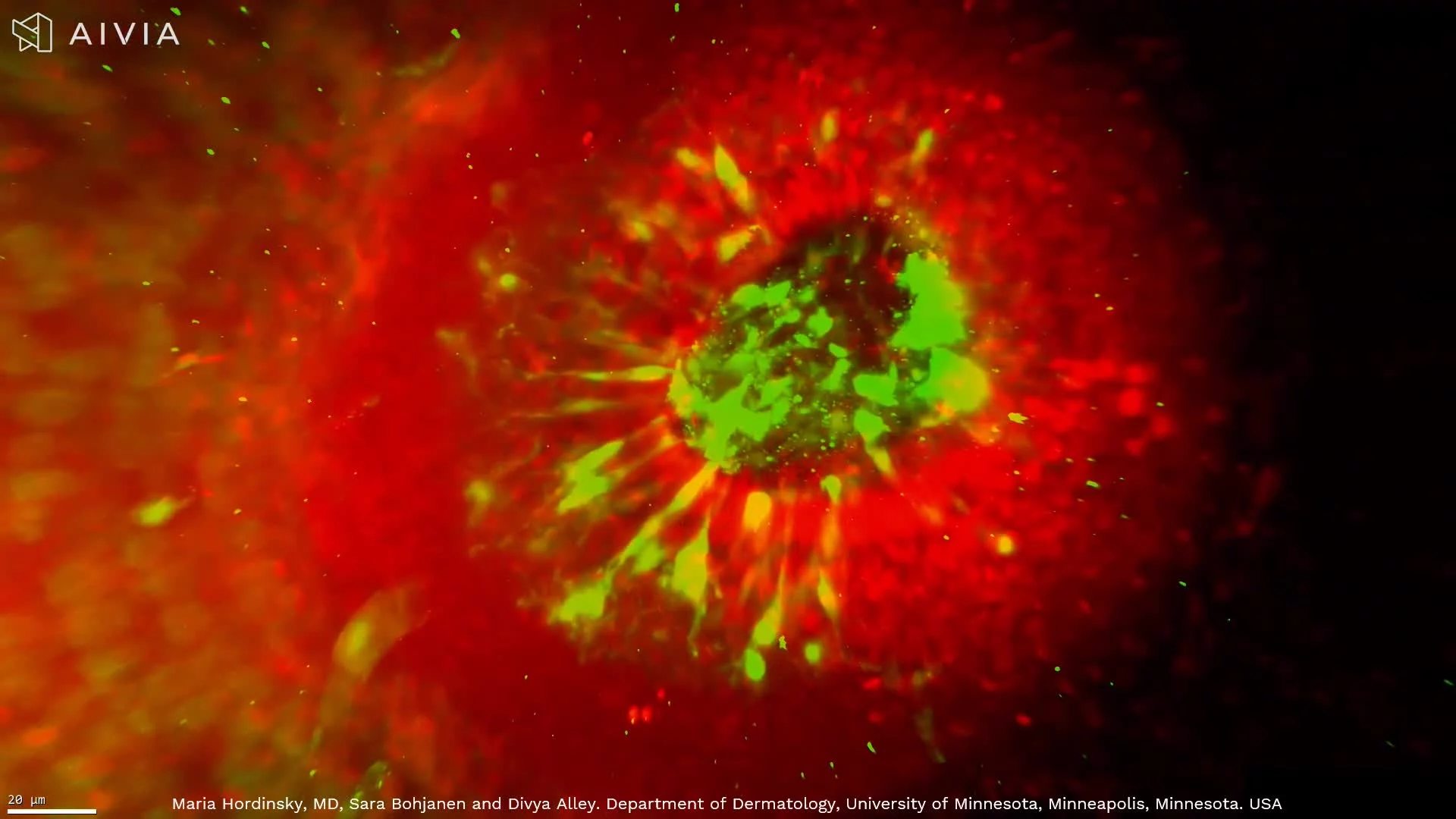
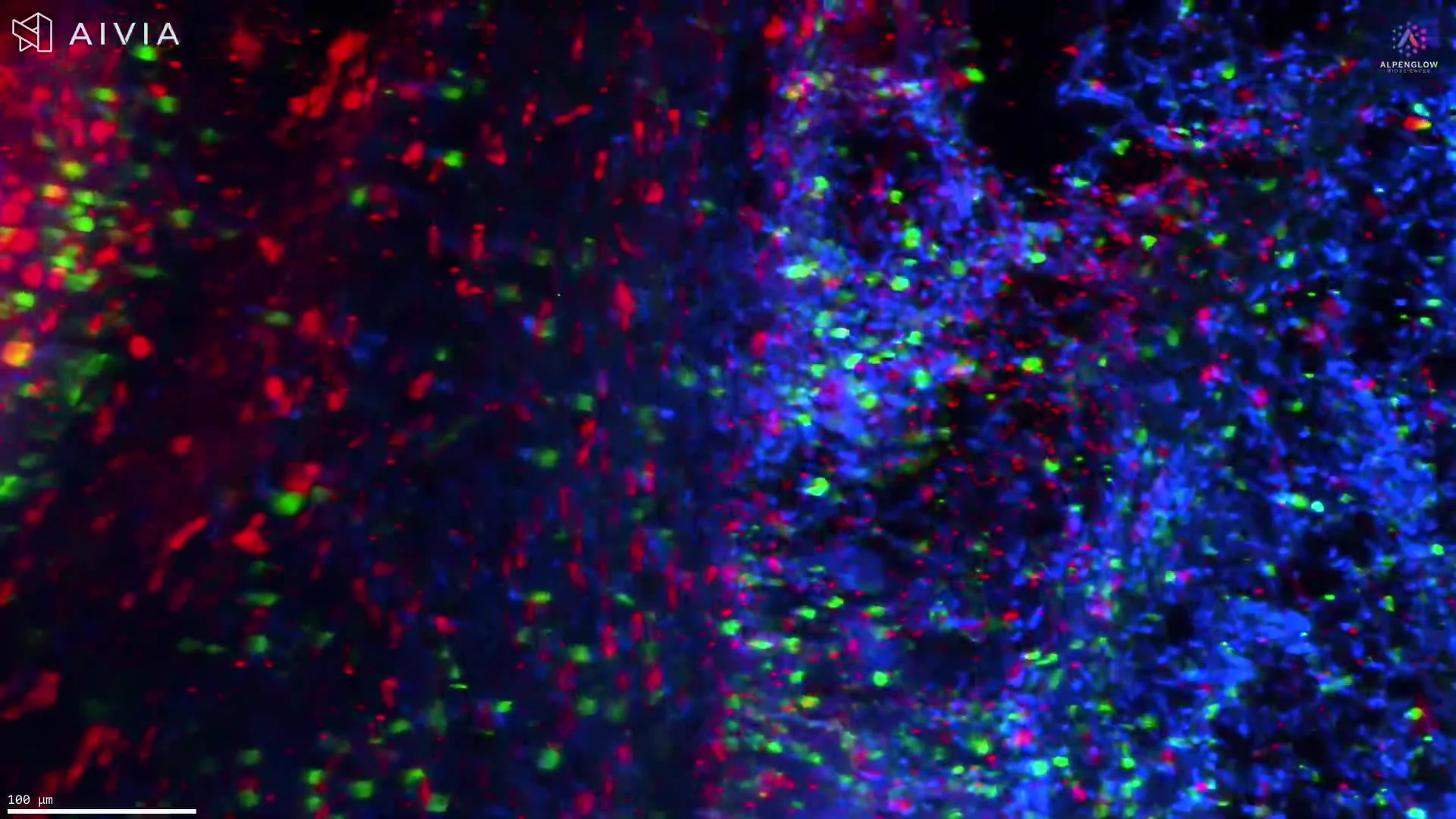
Use a dermatology-focused marker panel for nuclei, nerves, and immune cells to support skin microenvironment analysis.
Example markers shown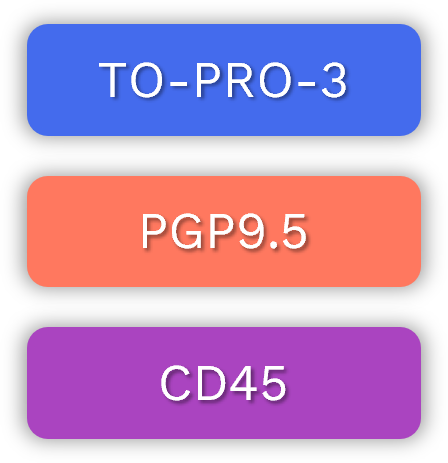
Design your panel
Adapt the marker strategy to your experimental goals, tissue type, species, and dermatology endpoint.
Custom marker strategy
Who it supports
Built for teams studying skin disease in spatial context
The 3D Derm Score™ Assay supports dermatology programs that need 3D tissue imaging, spatial profiling, and quantitative tissue analysis across intact skin samples.
Translational research teams
Study immune infiltration, peripheral innervation, neuroimmune interactions, and tissue remodeling in full biopsy context.
Dermatology drug programs
Compare treatment effects across intact dermatology samples using volumetric datasets and quantitative analysis.
Academic dermatology labs
Explore skin architecture, nerve distribution, immune organization, follicles, and disease remodeling in 3D.
Use the assay as a service or as part of an in-house Aurora 3D™ workflow. Alpenglow supports dermatology studies from intact tissue preparation through 3D imaging, data processing, and AI-powered analysis.
Start a dermatology study
Ready to see skin biology in full 3D context?
Use Alpenglow’s 3D tissue imaging, digital pathology workflows, and AI-powered analysis to study skin architecture, peripheral innervation, immune infiltration, and neuroimmune interactions across intact dermatology samples.
Assay service
Send dermatology samples for 3D imaging, processing, and quantitative tissue analysis.
In-house platform
Bring the Aurora 3D™ workflow into your lab with 3Di, 3Dm, and 3Dai.
Dermatology readouts
Generate spatial profiling readouts for nerves, immune cells, follicles, architecture, and remodeling.
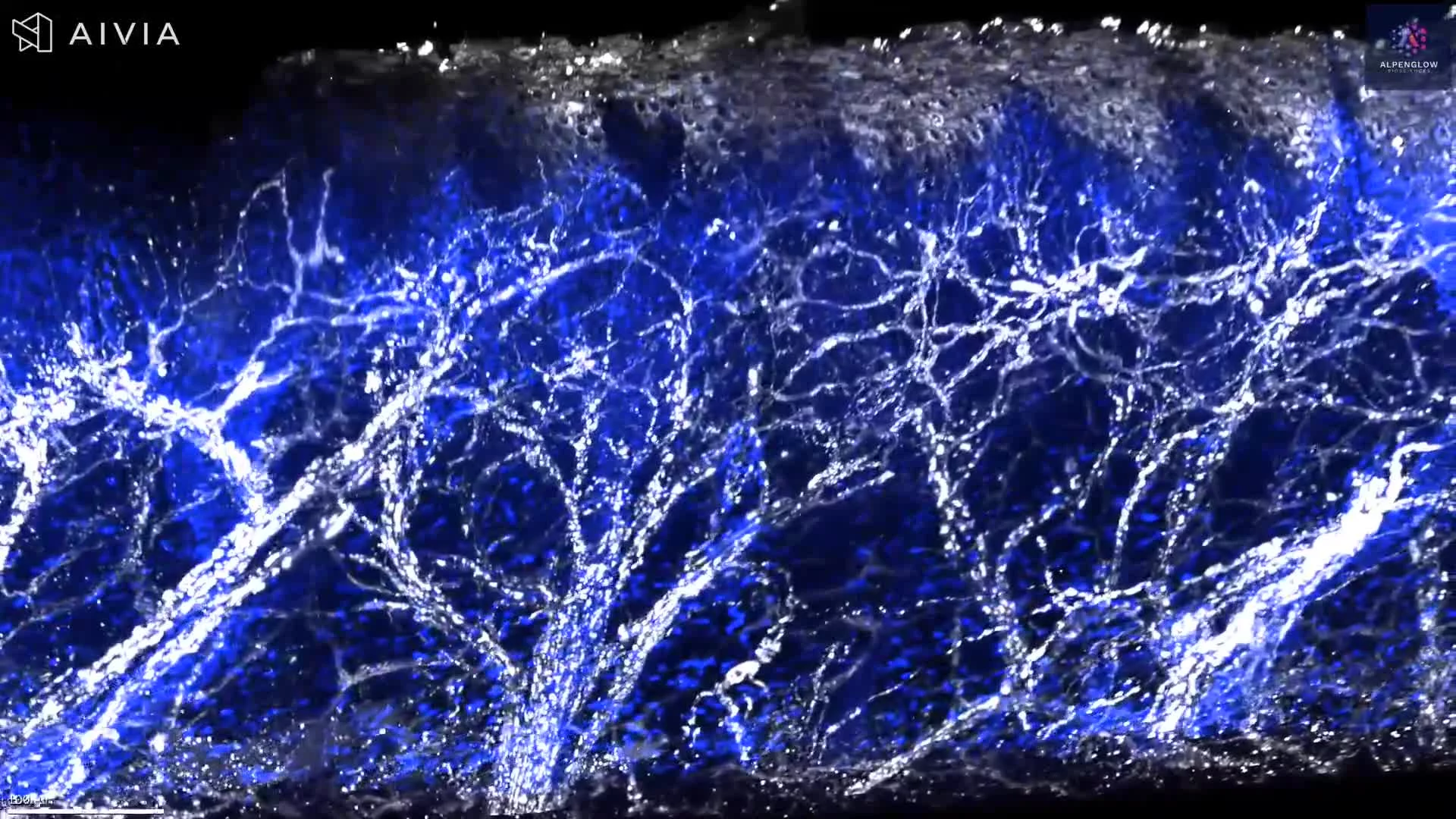
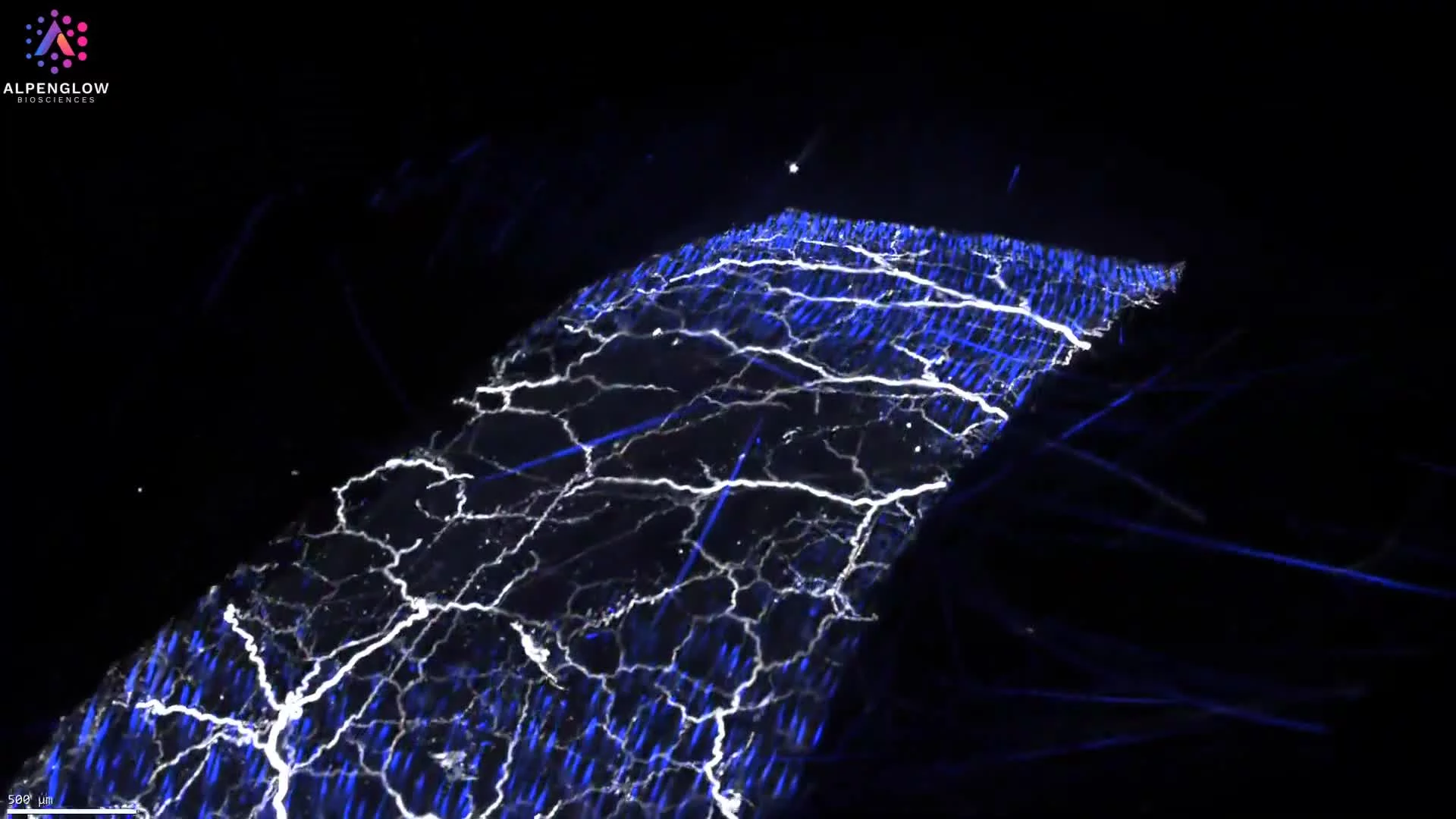
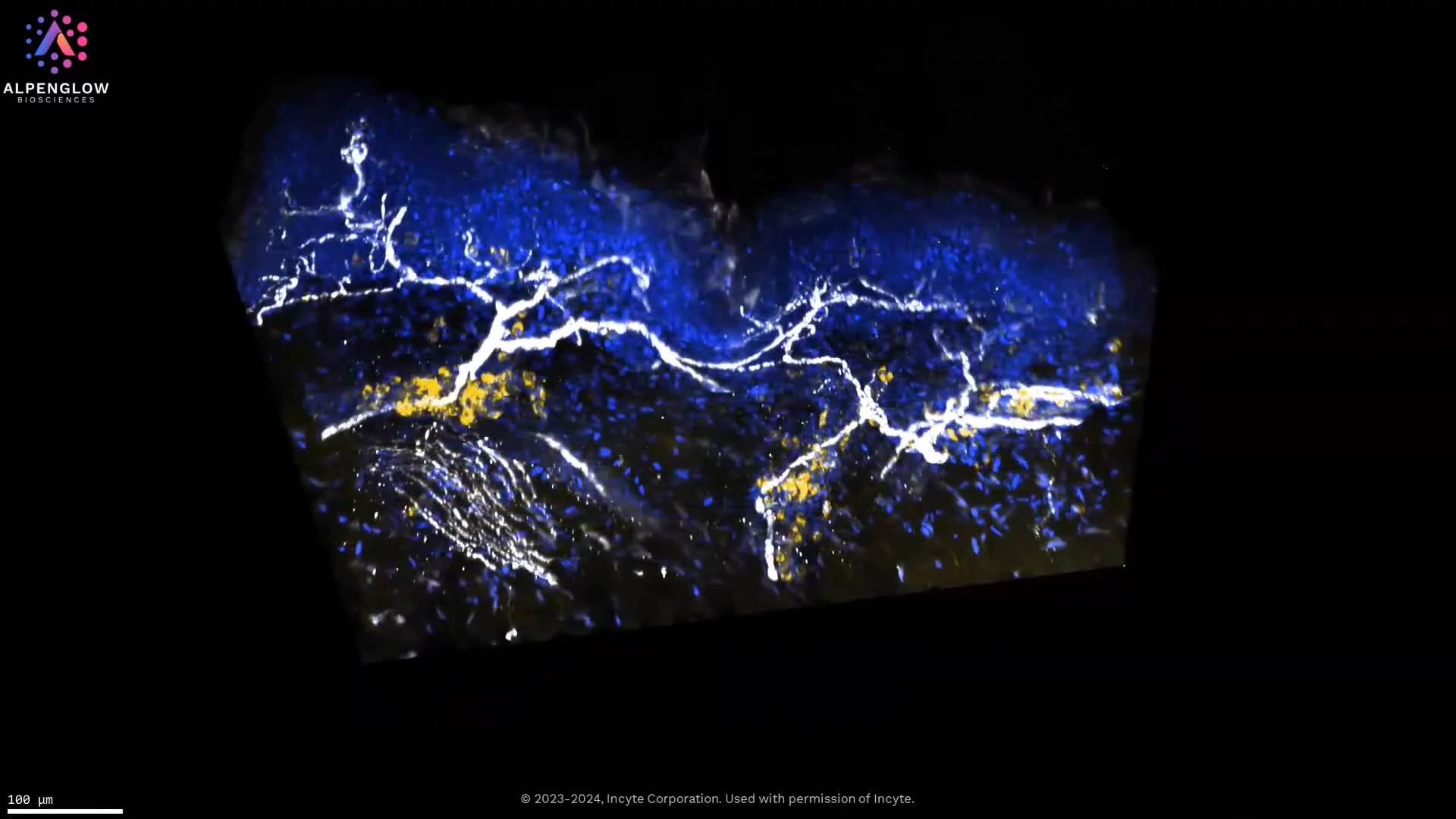
3D fluorescence imaging of mouse skin reveals the continuity and branching of sensory nerve networks across tissue depth. PGP9.5 highlights broader nerve architecture, while the Nav1.8-associated signal identifies a subset of sensory neurons.
This dataset presents mouse skin tissue imaged in 3D using fluorescence labeling. PGP9.5 highlights the broader nerve network, YO-PRO-1 labels nuclei, and Nav1.8-associated signal identifies a subset of sensory neurons.
The volumetric view preserves the continuity of nerve fibers across the imaged tissue depth, revealing large nerve bundles, finer branches, crossings, and terminal structures within dermal and epidermal regions.
With appropriate segmentation, the dataset can support measurement of nerve density, fiber length, branching, orientation, and spatial relationships with surrounding cells and tissue structures. These features are relevant to research on cutaneous innervation, sensory biology, pain, itch, inflammation, and treatment-associated changes in nerve architecture.
The tissue was imaged using the Aurora 3D™ Spatial Biology Solution, including the 3Di™ Hybrid Open-Top Light-Sheet microscope.