
3Dm™ DATA MANAGEMENT
3Dm™ turns large 3D tissue imaging data into analysis-ready volumes
Process whole tissue imaging datasets with automated stitching, registration, correction, and multi-channel integration for digital pathology, spatial profiling, and quantitative tissue analysis.
FROM RAW DATA TO ANALYSIS-READY VOLUMES
3Dm™ prepares volumetric datasets for the next step in spatial biology
Large-scale 3D tissue imaging creates complex multi-channel data. 3Dm™ brings those image volumes into a cleaner, aligned, and structured format so teams can move from acquisition to digital pathology, spatial profiling, and AI-powered analysis.
The goal is simple: reduce manual processing burden while preserving the quality needed for quantitative tissue analysis.
Capture
Start with large 3D tissue imaging datasets generated from intact samples and multi-channel fluorescence imaging.
Stitch and align
Assemble tiles and align image volumes to create coherent whole tissue imaging datasets.
Correct artifacts
Apply image correction steps such as dark-frame correction for noise reduction, flat-field correction, and destriping to improve dataset consistency.
Integrate channels
Register fluorescence channels so spatial relationships can be evaluated across tissue architecture.
Prepare for 3Dai™
Move analysis-ready volumetric datasets into downstream AI-powered analysis and quantitative tissue analysis workflows.
Core processing capabilities
Correct, align, and structure 3D image volumes before analysis
3Dm™ helps turn large whole tissue imaging data into cleaner, registered volumetric datasets for digital pathology, spatial profiling, and quantitative tissue analysis.
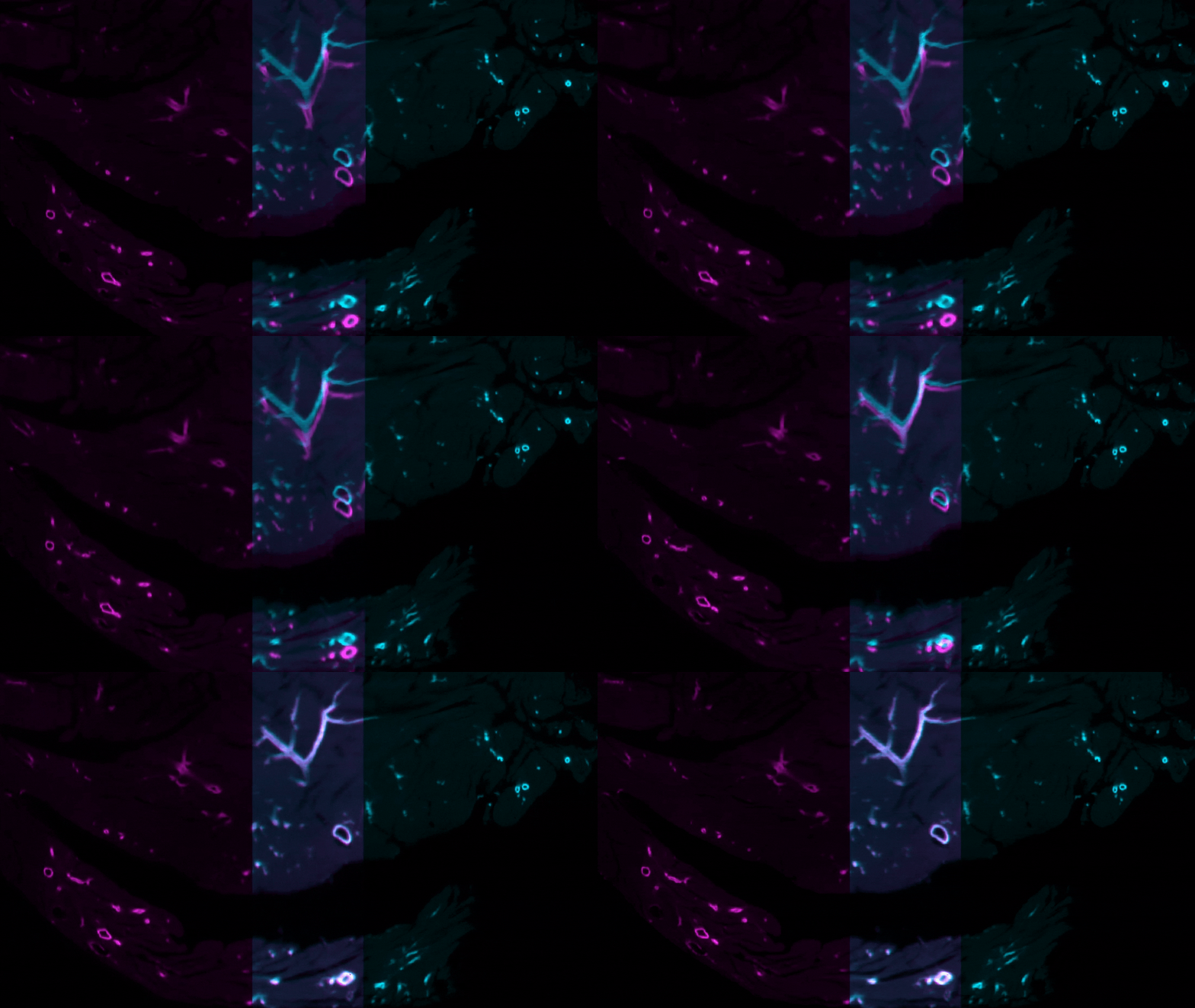
Precise alignment
Stitch and align images after acquisition to build coherent large-scale 3D tissue imaging datasets from intact samples.

Uniform illumination
Apply flat-field correction to reduce uneven brightness across the imaging field and improve dataset consistency.
Destriping
Reduce stripe artifacts from uneven illumination or shadows to improve visual consistency across large 3D tissue imaging volumes.
Multi-channel integration
Register fluorescence channels so marker relationships can be interpreted across intact tissue architecture and analysis-ready volumetric datasets.
Built for large 3D datasets
Manage the data complexity behind whole tissue imaging
Large-scale 3D tissue imaging produces volumetric datasets that need more than storage. They need correction, registration, organization, and preparation before reliable spatial profiling or AI-powered analysis can begin.
3Dm™ connects image acquisition to interpretation. It supports the transition from raw imaging data to cleaner, structured datasets that can move into downstream digital pathology and quantitative tissue analysis workflows.
Complex input
Large multi-channel image data from intact tissue samples, captured as volumetric datasets.
Processing layer
Stitching, alignment, correction, destriping, and channel registration help standardize the image volume.
Analysis-ready output
Cleaner and structured data supports downstream visualization, spatial profiling, and quantitative tissue analysis.
Applications
Data management for research programs that depend on clean 3D image volumes
3Dm™ supports 3D tissue imaging workflows where image quality, channel registration, and dataset consistency matter before downstream interpretation.
Drug discovery
Prepare large 3D imaging datasets for analysis of tissue architecture, marker distribution, and spatial relationships in translational research workflows.
- Whole tissue imaging datasets
- Multi-channel fluorescence data
- Analysis-ready volumetric outputs
Clinical research
Improve consistency across processed image volumes so digital pathology and spatial profiling teams can evaluate intact tissue context.
- Registered tissue volumes
- Cleaner image data for review
- Support for quantitative tissue analysis
Biomarker discovery
Structure large imaging data before downstream analysis so spatial patterns can be evaluated across intact 3D tissue architecture.
- Spatial profiling workflows
- Channel-aware marker context
- Preparation for AI-powered analysis
In the Aurora 3D Spatial Biology Solution, 3Dm™ sits between 3Di™ image acquisition and 3Dai™ AI-powered analysis.
Bridge from image to insightFrom processed data to biological insight
Move your 3D image volumes into quantitative analysis
3Dm™ prepares large volumetric datasets for the next stage of the Aurora™ workflow, connecting corrected and registered image data with 3Dai™ segmentation, spatial profiling, and quantitative tissue analysis.